The Making of a Monster: Did Victorian Bradford Create Its Own Criminals?

When we look back at the crimes of Victorian Bradford, it is tempting to begin with the moment of horror.
The poisoned sweet. The body discovered. The accused man standing before the court.
But perhaps the more interesting question is not simply who committed the crime? Perhaps the deeper question is: What created the world in which such crimes could happen?
Before Bradford became a city of mills, smoke, wealth and tragedy, it was a very different place. For centuries it remained a modest Yorkshire market town, built around wool, trade and community. Life was certainly hard, but it moved at a pace that people recognised. Families knew one another. Generations often remained rooted to the same streets and villages. Then came the Industrial Revolution. And Bradford changed forever.
During the nineteenth century, the town underwent one of the most dramatic transformations in Britain. Mills rose from the valley floor. Chimneys filled the skyline. Workers poured in seeking employment, opportunity and a better life. The growth was astonishing. But there was a problem.
Bradford grew faster than its ability to care for the people who lived there. The result was a town of extraordinary contrasts. On the hillsides of Manningham stood grand villas belonging to merchants, manufacturers and industrialists, men whose fortunes had been built on wool, enterprise and ambition.
A short distance away were streets where poverty, overcrowding and disease were daily realities. Families lived in conditions unimaginable today. Employment could disappear overnight. Injury, illness or misfortune could push ordinary people into desperation.
Two Bradfords existed side by side. One of progress. One of survival. And between them grew tension.
The Victorian age is often remembered for its confidence: railways, invention, science and empire. Yet behind that image was another Victorian world, one of workhouses, child poverty, dangerous streets and people living on the edge of society.
This was the Bradford that produced some of its darkest stories. The 1858 Bradford Sweet Poisoning scandal was not simply the story of one mistake or one man. It revealed a society where dangerous practices such as food adulteration had become accepted parts of everyday commerce. Cheap ingredients, competition and lack of regulation created a chain of events that ended in tragedy.
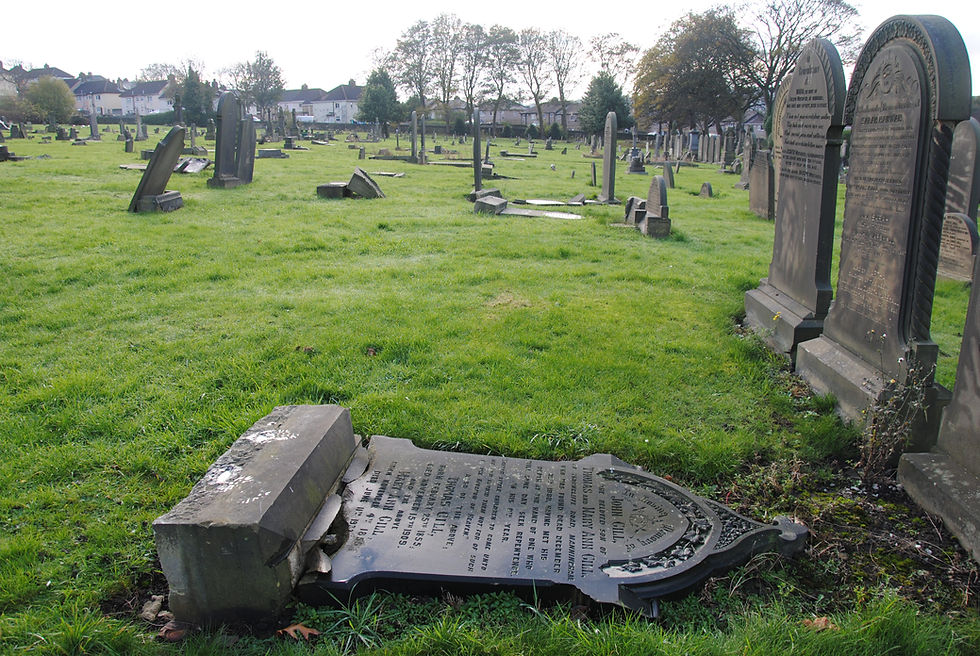
Thirty years later, the murder of young John Gill shocked the town again. By then Bradford wanted recognition as a modern, successful industrial centre. Yet beneath the civic pride remained uncomfortable questions about poverty, violence and the darker corners of urban life.
Were these crimes caused by evil individuals? Or were they symptoms of something larger? The answer, as with most history, is complicated.
People make choices. Individuals must carry responsibility for their actions. But history also asks us to examine the world around them. What happens when a town expands faster than its housing? When wealth grows faster than protection? When thousands of people arrive looking for opportunity, only to find themselves struggling simply to survive?
Victorian Bradford was not a monster. It was a remarkable place filled with innovation, ambition and extraordinary people. But it was also a place of contradiction. A town capable of producing great wealth and terrible poverty. Scientific breakthroughs and deadly ignorance. Compassion and cruelty.
Perhaps that is why these stories continue to fascinate us. Because behind every crime is more than a criminal. There is a street. A community. A moment in history. And sometimes, before we ask who the monster was, we must first understand the world that helped create it.



They certainly gives you food for thought, we naturally think that people are bad or wrong-uns but sometimes it could be just circumstance that drives them.