Bradford Town: A Living, Breathing victim of a Victorian Eco-system.

There is a strange moment that happens when researching Victorian Bradford long enough.
The modern city begins to disappear. Street names survive, but the streets themselves have changed. Entire courts and terraces have vanished beneath ring roads, concrete blocks and redevelopment. Markets moved. Public houses disappeared. Graveyards became overgrown. Industry faded.
Yet beneath the modern city, the Victorian one still exists in fragments. Old police reports. Coroner’s depositions. Burial registers. Newspaper columns browned with age. Forgotten names carved into weathered stone.
Over recent years I have spent considerable time researching the people, crimes and tragedies that shaped nineteenth-century Bradford. What began as simple historical curiosity slowly became something much larger. The deeper I researched, the clearer it became that Victorian Bradford was not merely an industrial town. It was a city being built faster than society could safely manage. Factories expanded at astonishing speed. Chimneys multiplied across the skyline. Thousands arrived seeking work, opportunity and survival. Wealth flowed into parts of Bradford, while overcrowding, poor sanitation and dangerous living conditions spread through others.
It was a city driven by ambition. But ambition often moved faster than regulation. The Bradford poisonings of 1858 exposed that reality with horrifying clarity. Today the incident is often reduced to a grim historical footnote: arsenic accidentally mixed into peppermint humbugs, twenty-two dead, hundreds ill, national outrage.
But the true story reveals something far larger about Victorian Britain itself. It was about public trust.
Ordinary people bought food believing it was safe. They trusted market traders, suppliers and systems that barely existed in regulated form. It was about scientific progress.
Victorian forensic science was still developing, yet investigators and chemists were beginning to use analytical methods that would shape the future of criminal investigation and public health.
It was about poverty. Cheap food mattered because many families had little choice. Adulteration became widespread partly because industrial Britain rewarded low prices and rapid production above almost everything else. And above all, it was about the human cost of industrial expansion. That is what makes "The Bradford poisonings" still feel disturbingly modern.
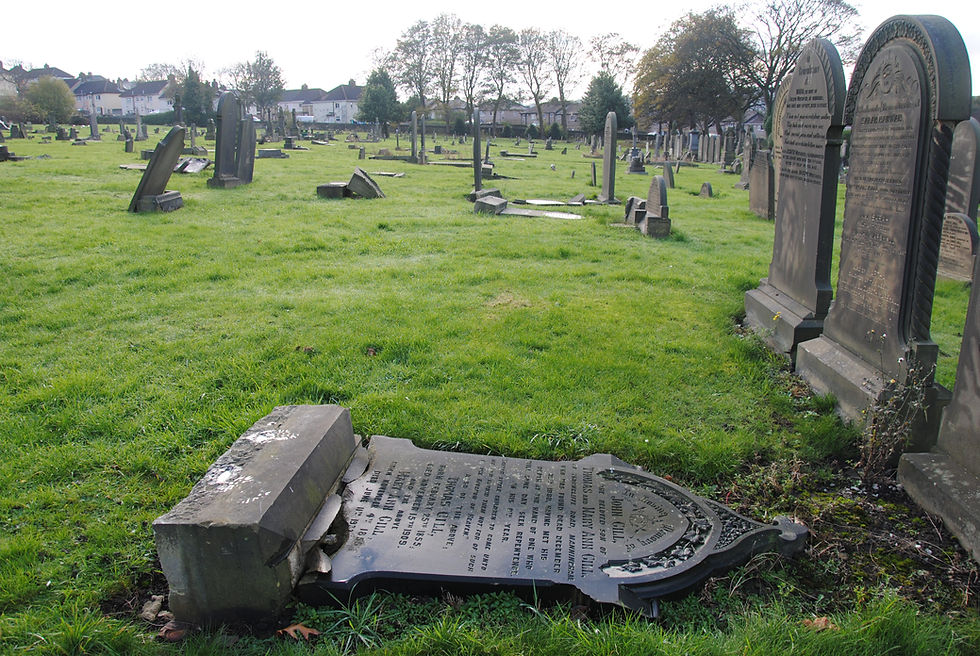
Many of the locations connected to the tragedy still exist in altered form today, hidden within the contemporary city. Some survive openly. Others exist only in maps, burial records and scattered references inside archives. You begin to realise that history is not truly gone. It simply becomes buried beneath newer layers.
Researching these stories has fundamentally changed the way I see Bradford itself. Walking through the city now often feels like walking across two places at once: the modern city above, and the Victorian city beneath.
That research eventually became the foundation for my historical work "The Bradford Poisonings", though the book itself was never intended simply as a retelling of deaths and dates.
What interested me most was atmosphere. How did Bradford feel in 1858? What did people fear? What did they trust? How did industrialisation reshape ordinary lives? Those questions matter because historical crime is not merely about violence or tragedy. At its best, it reveals the pressures, ambitions and failures of the society that produced it. The Bradford poisonings remain one of the clearest examples of that collision between progress and consequence.
Victorian Bradford was a city of smoke, invention, wealth, overcrowding, faith, hardship and contradiction.
And for one terrible evening in 1858, sweetness itself became deadly.



Excellent insight, too many of this walk around with their eyes shut when it comes to history of this great city just one question why do you keep throwing to it as a Town?