Six Weeks, Several Stories, and Far Too Many Rabbit Holes

It has been around six weeks since I last sat down to write a blog, although “sat down” may give a rather misleading impression of what has been happening in the meantime. The truth is that I have been busy.
Very busy.
One of the peculiarities of writing historical fiction is that finishing one piece of work rarely feels like finishing anything at all. Instead, one closed door seems to reveal three more behind it. A name in a newspaper leads to an inquest. An inquest leads to a street. The street leads to an old map, the map to another name, and before long an entire evening has disappeared while I try to establish who occupied a particular building in Bradford 160 years ago. I have come to accept that this is simply how I work.
Fragments of Truth
The project occupying most of my attention recently has been Fragments of Truth. The manuscript is now essentially complete and has reached that dangerous stage where the temptation is to declare it finished and send it out into the world. I am resisting that temptation. Instead, I have decided to give it one final proofread myself. There comes a point with any manuscript when the author becomes almost blind to it. You know what a sentence is supposed to say, and consequently your brain very helpfully reads what you intended rather than what is actually printed on the page. Nevertheless, I want to go through it once more, slowly, before publication.
At around 45,000 words, Fragments of Truth is somewhat shorter than some of my other work, but I don't think that harms it. If anything, its tighter length suits the story. I have never believed in adding ten thousand words simply to make a book look more substantial on a shelf. A story should be as long as the story requires. When it is done, it is done. And this one is very nearly there.
The Problem with History
Meanwhile, research continues to cause trouble.I mean that in the best possible sense. My fascination with Victorian Bradford began with a murder investigation and has expanded steadily ever since. What initially interested me about these cases was the crime itself: what happened, who was accused, what evidence existed and whether the authorities reached the correct conclusion.Increasingly, however, I find myself interested in the world surrounding the crime. How did people live? What did a particular street actually look like? How did a policeman investigate a suspicious death before fingerprints, DNA, modern pathology or computer databases? What could a Victorian chemist genuinely establish from a few grains of powder, a stained piece of cloth or the contents of a dead man's stomach? And perhaps most importantly: what did people at the time believe?
That last question matters because historical characters cannot know what we know. It is very easy to give a Victorian investigator twenty-first-century instincts. It is much harder and much more interesting to make him intelligent while restricting him to the knowledge, prejudices and scientific limitations of his own time.
That is where characters such as Rimmington become particularly useful to me.
Science was advancing extraordinarily quickly during the nineteenth century, but it remained imperfect. A clever investigator could sometimes glimpse the answer without possessing all the tools necessary to prove it.
For a novelist, that gap between suspicion and proof is fertile ground.
The Stories Waiting Their Turn
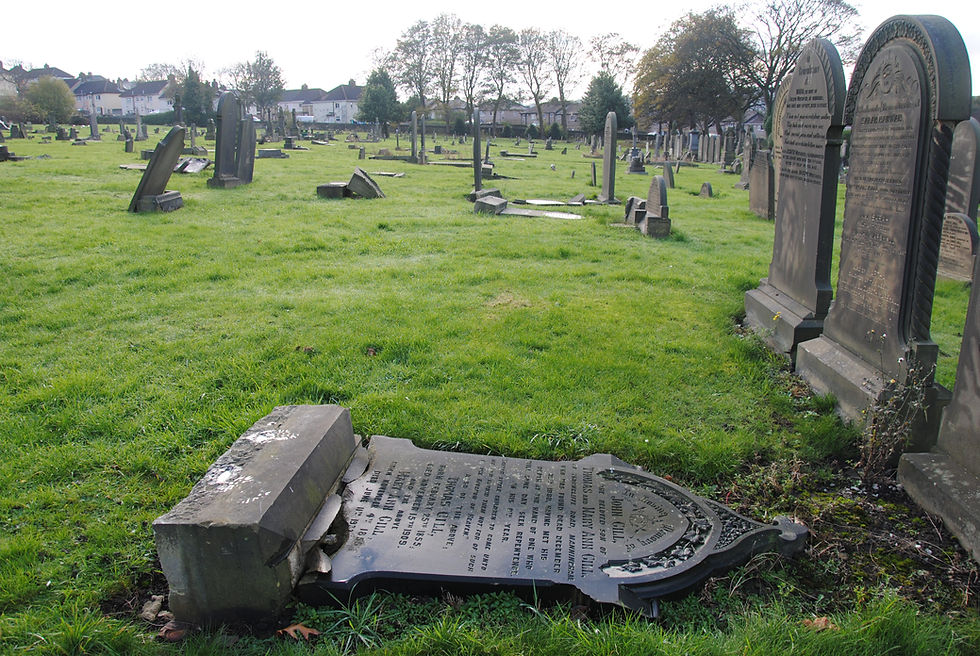
The difficulty is that there are rather too many stories waiting their turn. I still have work to complete on Twice Hanged. Penny Dreadful remains very much alive. The John Gill material continues to demand reconsideration, particularly as further research changes how I view parts of that extraordinary case.
Then there are the James Withers notebooks. And the Spanish letter. And several other ideas which I really ought not to mention because experience suggests that the moment I do, I will convince myself that they urgently require another three weeks of research.
Eventually, I would also like to explore some of these stories in screenplay form. Victorian Bradford is intensely visual: mills disappearing into smoke, narrow streets under gaslight, crowded courtrooms, chemists' laboratories, police offices and the enormous divide between wealth and poverty existing within a few streets of one another. It deserves to be seen as well as read. But there is an order to these things. At least, that is what I keep telling myself.
Why Bradford?
I occasionally wonder whether I will eventually exhaust Victorian Bradford as a subject. I increasingly suspect that I won't. The deeper I look, the larger it becomes. Bradford during the nineteenth century was a remarkable place: enormously wealthy and desperately poor; progressive and brutal; scientifically ambitious yet frequently primitive in its treatment of ordinary people. It grew at astonishing speed, and institutions struggled to keep pace with the population they were supposed to serve. Police forces developed. Medicine changed. Forensic science emerged. Newspapers flourished. Courts wrestled with evidence that science was only beginning to understand. Public outrage occasionally became legislation.
Behind all of that were ordinary people whose lives generally survive only as a few lines in a census, a newspaper report, a court record or a burial register. Those fragments are often all we have. But occasionally, if enough of them can be brought together, they allow a person who disappeared more than a century ago to step briefly back into the light. Perhaps that is ultimately what keeps drawing me back. The murders and scandals provide the framework, but they are not really the whole story. The people are. And there are still plenty of them waiting to be found.
For now, however, I have a manuscript requiring one final proofread. Then, perhaps, I shall concentrate on one project at a time.

I give that resolution approximately forty-eight hours.



That's just how my mind works as well, I could do with more discipline. LOL