Reconstructing a Crime: The Development of the John Gill Story

From Fragmented Records to Narrative Truth: Reconstructing the John Gill Case
The origins of this research, and how it developed into Stolen Innocents, are outlined in more detail here: Reconstructing a Crime: The Development of the John Gill Story
There is a marked difference between discovering a story and constructing one. The case of John Gill did not arrive fully formed. It emerged in fragments, scattered across inquest reports, newspaper columns, burial records, and occasional references within broader accounts of Victorian crime in Bradford. Each piece, taken alone, was incomplete. Together, they suggested something far more complex. The difficulty lay not in the absence of information, but in its inconsistency.
The Problem of Victorian Evidence
Names shifted in spelling. Dates conflicted. Witness accounts, recorded under pressure and shaped by the conventions of the time, carried their own uncertainties. Even the tone of reporting varied , at times sober and factual, at others coloured by the moral anxieties of the Victorian press. To approach such material as a simple record would be to misunderstand it entirely. Victorian investigations were not conducted with the procedural clarity expected today. There existed no standardised forensic framework, no consistent evidential handling, and no uniform method of recording testimony. Instead, the truth was often negotiated.
Coroners’ inquests, while invaluable, were shaped as much by social expectation as by fact. Witnesses spoke within the limits of their understanding, and often within the constraints of what they believed was expected of them. Silence, omission, and assumption were as present as declaration.
From Historical Record to Reconstruction
The development of Stolen Innocents required a deliberate shift in approach. Rather than asking, “What happened?”, the more useful question became: “What can reasonably be understood from what survives?”
Where the historical record is clear, it must be respected. Where it is silent, the writer is faced with a choice: leave the silence intact, or attempt a reconstruction grounded in probability, context, and human behaviour.
It is here that historical fiction becomes a discipline rather than an indulgence. The intention is not invention for its own sake, but the careful bridging of gaps, always with a clear awareness of the boundary between fact and interpretation.
Bradford as a Living Context
The story of John Gill is inseparable from the Bradford in which it occurred. Mid-nineteenth century Bradford was a city of rapid expansion, industrial wealth, and profound inequality. Crowded housing, transient populations, and the pressures of labour created conditions in which vulnerability was commonplace and oversight limited. To understand the crime, one must understand the environment that permitted it. This broader context informed every stage of development. Streets were mapped, distances measured, and social conditions examined, not as background detail, but as active components of the narrative.
The Weight of Interpretation
There is an unavoidable responsibility in handling such material. The individuals involved were real. Their lives, however briefly recorded, carried consequence. To reduce them to mere narrative devices would be to diminish that reality. For this reason, restraint becomes as important as detail. The aim throughout the development of the John Gill narrative was not to dramatise beyond recognition, but to present a version of events that feels both authentic and grounded , one that acknowledges uncertainty while still offering coherence.
Toward a Narrative Truth
Absolute certainty is rarely possible in historical reconstruction. What can be achieved, however, is something equally valuable:
👉 a narrative that aligns with known facts
👉 respects historical context
👉 remains plausible within human behaviour
That is the foundation upon which Stolen Innocents was built. Not a definitive account, such a thing may never exist, but a considered and disciplined attempt to bring coherence to a story that has, for too long, existed only in fragments.
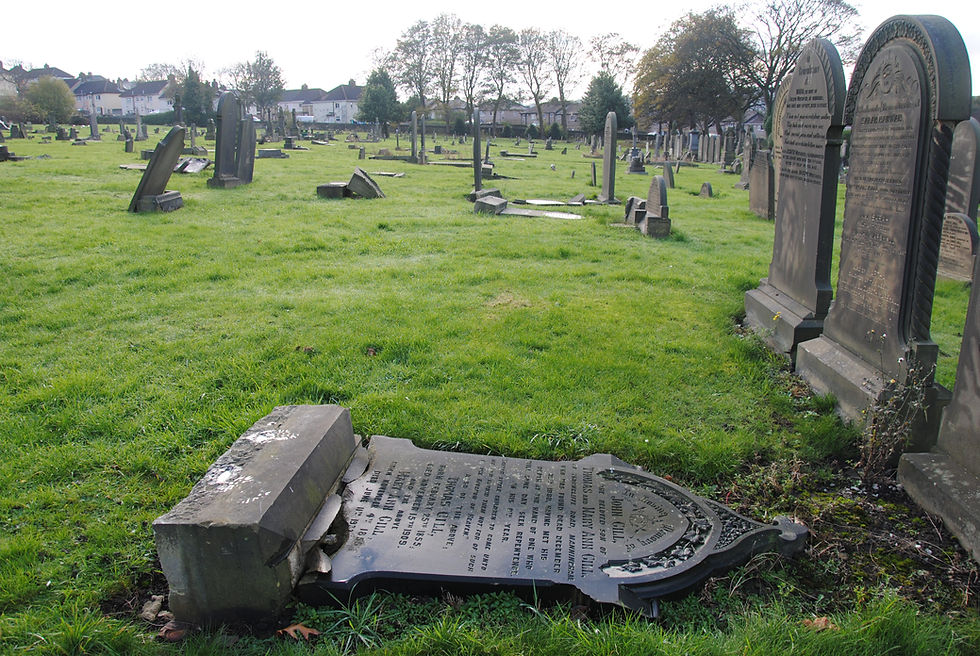
The present-day implications of the John Gill case, including the condition of the grave at Windhill Cemetery and the wider issue of preservation, are discussed here: From Page to Public Record: The Telegraph & Argus Feature



Comments